If you’re searching for historic homes in St. Petersburg, Florida, it’s rare to find one this tied to the city’s early growth.
The James Henry House, built circa 1905, dates back to a time when this area was still largely undeveloped more farmland and open land than neighborhood.
A Home Built Before the Neighborhood
When this home was built, the surrounding neighborhood of Euclid-St. Paul hadn’t been formally subdivided yet.
James Henry owned this property decades before building the home, making him one of the earlier landholders in this part of St. Petersburg.
Who Was James Henry?
James Henry was an early resident who played a role in the city’s development through business and community involvement. Originally from Scotland, he worked as an accountant and was active in local organizations during a time when St. Petersburg was still establishing itself. Known for founding The Lawn Bowling Club and passed before the St. Petersburg Shuffleboard Club was constructed in 1925.
Architecture and Construction
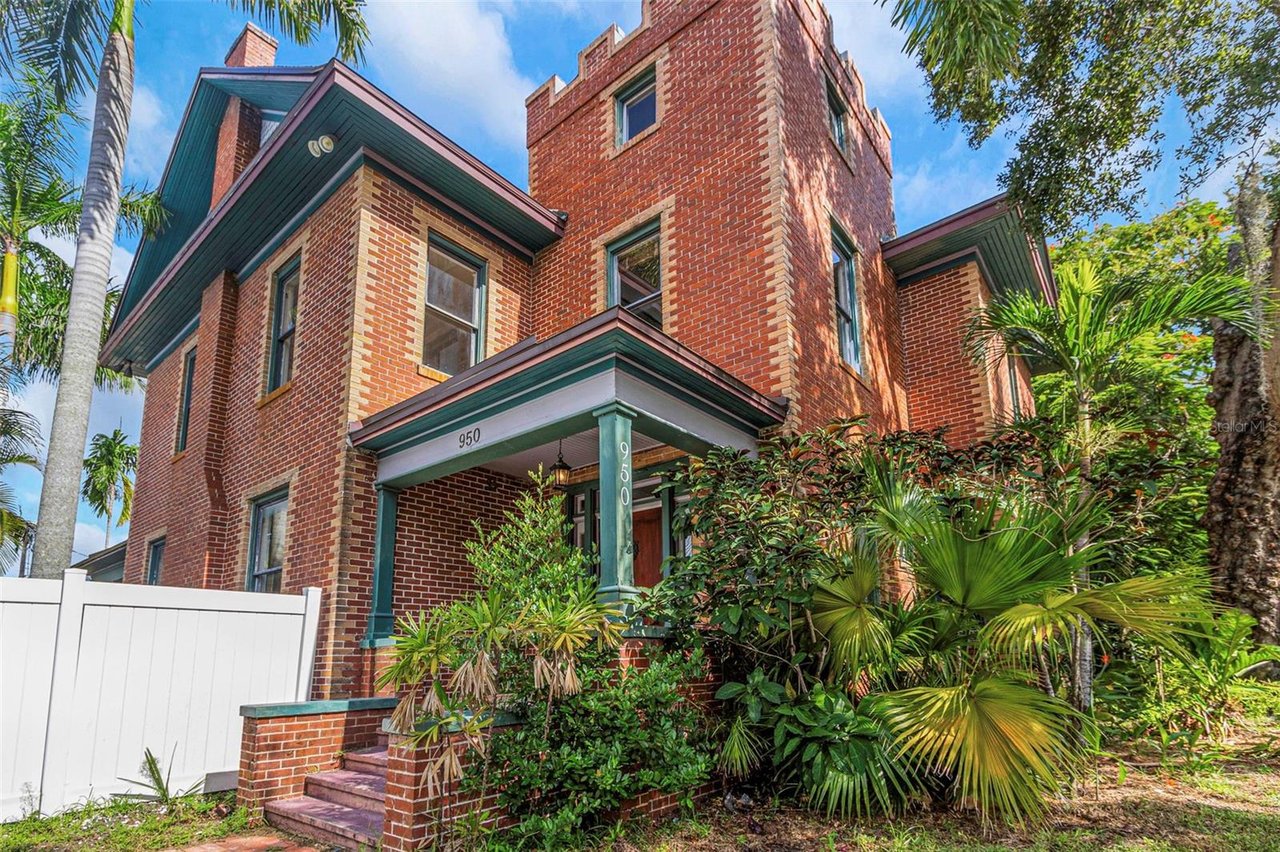
The home reflects a transition between Queen Anne and Tudor Revival styles.
Key architectural features include:
-
Steep gabled rooflines
-
A prominent brick chimney
-
A tower element with a castellated parapet
-
Asymmetrical layout typical of early 1900s design
The construction is also notable for the time:
-
Wood frame structure with brick veneer
-
Buff-colored brick detailing around windows and doors
-
Original wood windows and masonry elements that have been preserved
At the time, most homes in St. Petersburg were simpler wood frame structures. This one stands apart in both material and design.
How the Home Evolved
Like many larger homes near downtown, the property changed over time.
In the 1920s, it was converted into a restorium, then later into apartments. More recently, it has been restored back to a single-family residence, with an effort to retain its original character and details.
What the Area Looked Like in 1905
This part of St. Petersburg in 1905 was:
-
Open land with native vegetation and pine flatwoods
-
Some farms and homesteads
-
Nearby areas tied to fishing and the waterfront
-
Minimal infrastructure compared to today
It was a quieter, more rural setting than what exists now.
Why Homes Like This Matter
Homes from this period offer something different:
-
Early construction methods and materials
-
Architectural styles that aren’t commonly built today
-
A direct connection to the city’s early development
For buyers looking for historic homes in St. Petersburg, properties like this tend to stand out for those reasons.
Thinking About Buying or Selling a Historic Home?
Buying a historic home in St. Petersburg is different from a typical transaction. From older construction to local nuances, having the right guidance makes a difference. I work closely with buyers seeking architectural and historic properties across St. Pete and the Gulf Coast.
If you’re considering buying or selling a historic home, there are a few additional factors to understand—inspections, insurance, and long-term maintenance.
I’ve outlined that here:
Why you Should Use a Real Estate Agent When Buying a Historic Home in St. Petersburg
If you’re searching for historic homes in St. Petersburg or considering selling one, I’d be happy to help you navigate the process.